Finding a reliable Husqvarna Coil supplier in China requires more than comparing online prices. The right partner should understand ignition systems, engine compatibility, and consistent manufacturing control. A professional supplier can explain coil resistance, voltage requirements, connector design, and suitable Husqvarna model references. Technical confidence matters.
Look for manufacturers with verifiable production experience and clear quality procedures. Ask for factory photographs, product specifications, inspection records, and sample testing before placing a large order. A practical test may include checking resistance with a multimeter and fitting the coil to a compatible engine. Small details reveal much. The connector should fit firmly, the insulation should look even, and mounting holes should align accurately. Request batch consistency data when possible. One successful sample proves little.
Communication also shows supplier reliability. Reputable companies answer questions directly, identify limitations, and provide realistic lead times. They should discuss packaging, traceability, replacement policies, and export documentation without avoiding difficult points. Independent audits or recognized quality certifications can add confidence, but documents still deserve verification. No supplier is perfect. Even experienced buyers can overlook changing raw material quality or unclear model references.
This guide explains how to compare Chinese suppliers, verify technical claims, and reduce avoidable purchasing risks. It focuses on evidence rather than attractive promises. By combining sample evaluation, factory communication, and careful specification checks, buyers can make a more informed decision. The best Husqvarna Coil supplier is not always the cheapest. It is the one that delivers dependable performance, transparent service, and repeatable quality over time.
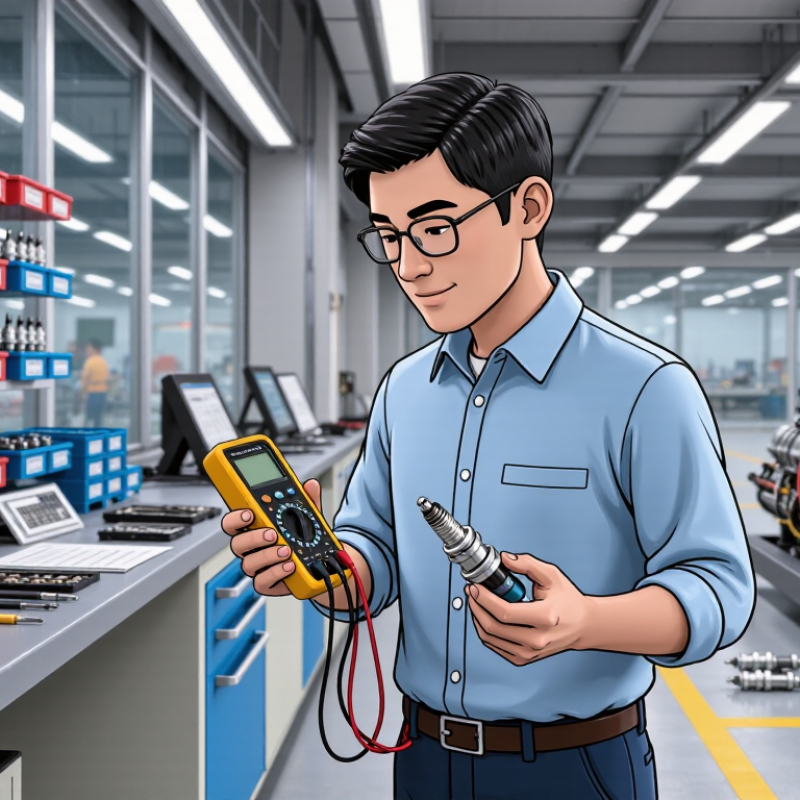
Before contacting a coil supplier, define the equipment precisely. Record the engine family, displacement, production year, flywheel design, mounting-hole distance, connector shape, and required air gap. A coil that looks identical may produce the wrong spark timing. It may also damage the ignition module. Field technicians often measure the original part before ordering, because catalog descriptions can be incomplete.
Industry data supports this cautious approach. The 2024 Outdoor Power Equipment Market report projects steady growth in small-engine equipment, with electrification increasing compatibility pressure. Meanwhile, U.S. environmental certification records show many engine configurations within the same power category. This means “same size” is not a dependable specification. Check primary dimensions, resistance values, grounding method, and spark advance requirements. Ask the supplier for inspection reports, material details, and test results under heat and vibration. I have seen low-cost samples pass a bench test but fail after repeated hot starts. That weakness is easy to miss.
Tips: Create a one-page requirement sheet. Include clear photos and measured gaps. Request a sample before bulk purchasing. Compare cold-start and hot-start performance. Ask whether testing follows recognized ignition-component procedures. Do not rely only on marketplace keywords. That shortcut may save minutes, then create weeks of rework. Supplier quality systems also deserve attention; an ISO 9001 certificate helps, but it does not prove exact equipment compatibility. Verify both.
Define Your Husqvarna Coil Requirements and Equipment Compatibility
Before requesting quotations, confirm the five compatibility points shown above: engine application, mounting layout, flywheel and magnet position, ignition-wire connection, and stop-switch circuit. A supplier should provide drawings, electrical specifications, sample approval, and traceable quality records for every proposed replacement coil.
When sourcing ignition coils from China, quality should be measured beyond appearance. Request samples from the same production line used for regular orders. Inspect the housing, terminals, sealing compound, and connector fit. A stable supplier should provide resistance readings and test results for every production batch. Small details matter.
Experience is easier to verify through evidence. Ask how long the factory has produced engine ignition components, not how long the trading company has existed. Review anonymized customer references, production capacity, and traceability records. A capable supplier can explain its winding process, insulation controls, and failure analysis method in clear language. Vague answers deserve caution.
Certifications can support trust, but certificates alone prove little. Check the certificate number, issuing body, validity period, and covered factory address. Confirm that ISO 9001 applies to the actual manufacturing site. Product test reports should identify the tested model, conditions, and laboratory. Do not accept recycled documents. An attractive factory tour is not proof. My own assessment would remain incomplete without a pilot order, incoming inspection, and repeated heat-cycle testing. Even good suppliers may show uneven packaging or occasional labeling errors. Discuss these weaknesses openly, then measure their corrective response. A reliable partner records defects, identifies causes, and prevents the same issue from returning.
Choosing a reliable Husqvarna coil supplier in China requires more than comparing prices. Start by checking the material composition. A dependable ignition coil should use stable copper windings, heat-resistant insulation, and a durable resin seal. The core material also affects magnetic efficiency and spark strength. Ask for material certificates and batch traceability.
Review the supplier’s technical specifications carefully. Confirm primary and secondary resistance, operating voltage, spark gap performance, connector dimensions, and temperature range. These figures must match your engine model. A coil that looks identical may still produce weak ignition or unstable starting. Request dimensional drawings, sample units, and a written tolerance sheet.
Testing evidence matters. Ask for insulation resistance, high-voltage endurance, vibration, moisture, and thermal cycling results. Testing should follow recognized electrical or automotive standards relevant to the product.
ISO 9001 certification shows process control, but it does not prove every coil performs well. Request recent laboratory reports, production inspection records, and serial-number traceability.
If possible, test samples after cold starts and extended running. Real workshop conditions expose faults that factory checks can miss. I would also inspect rejected units, although many suppliers may hesitate to show them. That hesitation deserves attention.
Selecting a Chinese ignition-coil supplier requires more than comparing unit prices.
A low quote may exclude testing, export packaging, tooling, or replacement parts. I once accepted the cheapest offer.
The final landed cost was higher.
Request three comparable quotations. Specify copper wire grade, resistance range, connector type, test voltage, and packaging quantity. Then calculate the landed cost, not just the factory price.
The World Bank’s 2023 Logistics Performance Index evaluates customs, infrastructure, shipment quality, and delivery timeliness. These factors can expose hidden cost risks.
Ask whether the quoted price is EXW, FOB, or CIF.
The difference matters.
Minimum order quantity also needs practical review.
A supplier offering 500 pieces may be more useful than one requiring 5,000. Confirm whether mixed models are allowed. Ask for a pilot order and a written defect policy.
Lead times should separate sample production, mass production, and inspection. For stable planning, request a production schedule with a buffer of five to ten working days. Sometimes suppliers promise too quickly.
Shipping terms deserve equal attention.
UNCTAD reports that over 80% of global merchandise trade by volume moves by sea, so port delays can affect seasonal inventory. Request recent shipment records, carton dimensions, gross weight, and the preferred port.
Compare ocean freight, rail, and air freight using the same delivery destination. Keep payment milestones linked to inspection results.
A supplier with clear documents, traceable testing, and realistic delivery promises is usually safer than the lowest bidder.
Selecting a reliable ignition coil supplier in China requires more than comparing prices. Look for a manufacturer with proven experience in small-engine electrical components. Request company records, production photos, test reports, and customer references. A professional supplier should explain wire specifications, insulation materials, resistance ranges, and operating temperature limits clearly. Avoid vague answers.
Quality control must begin before production. Confirm approved drawings, connector dimensions, winding details, and resin coverage in writing. Ask for a pre-production sample and test it on an actual engine. Check starting performance, spark stability, heat resistance, vibration tolerance, and water protection. Record every result. Keep samples from each approved batch for comparison. This creates traceability when a failure appears months later. Factory audits can reveal practical issues, such as dusty assembly tables or poorly stored copper wire. These details matter.
Tips: Use an inspection checklist with measurable limits. Require incoming-material checks, first-piece approval, and final sampling. Discuss corrective actions before signing an order. A supplier should provide batch numbers and inspection records with every shipment. Do not rely only on certificates. They can be useful, but they cannot replace physical testing. I have found that simple tests often expose defects missed by polished documents. No system is perfect. Review failure data regularly, and adjust inspection levels when repeated problems appear.
| Evaluation Dimension | What to Check | Recommended Acceptance Criteria | Verification Method | Control Frequency | Risk Level |
|---|---|---|---|---|---|
| Technical Capability | Experience with small-engine ignition coils, molded insulation systems, winding processes, and assembly tolerances. | Documented capability for the required voltage, resistance, dimensions, and mounting configuration. | Review technical drawings, process flow charts, sample records, and production equipment lists. | Before approval and after major process changes | High |
| Quality Management System | Documented procedures for incoming inspection, production control, final inspection, calibration, and corrective action. | A functioning quality management system with controlled records and traceable procedures. | Conduct a document review and remote or on-site process audit. | Annual audit and quarterly performance review | High |
| Material Control | Copper wire, magnetic core, resin, terminals, connectors, and insulation materials must match the approved specification. | Approved material grade, supplier lot identification, and valid incoming inspection records. | Check certificates of conformity, incoming inspection reports, and lot traceability. | Every incoming lot | High |
| Dimensional Accuracy | Overall dimensions, mounting-hole position, terminal location, air gap, and connector geometry. | All dimensions within the approved drawing tolerances; no interference during installation. | Use calibrated gauges, calipers, coordinate measurement, and a fit-check fixture. | First article and sampling of every production lot | High |
| Electrical Performance | Primary and secondary resistance, insulation resistance, dielectric strength, and output performance. | Values remain within approved engineering limits at the specified test temperature and test voltage. | Perform 100% resistance and continuity testing where practical; use sampling for advanced functional tests. | Every unit for basic electrical tests | Critical |
| Environmental Durability | Resistance to vibration, heat, moisture, thermal cycling, oil exposure, and corrosion as required by the application. | No cracking, insulation breakdown, corrosion, or unacceptable electrical drift after defined tests. | Approve a validation plan using application-specific temperature, vibration, humidity, and chemical tests. | Initial approval and after material or tooling changes | Critical |
| Process Consistency | Control of winding tension, resin curing, terminal crimping, molding temperature, and assembly torque. | Key process parameters have defined limits, alarms, operator instructions, and recorded results. | Review process control plans, machine parameter logs, control charts, and operator training records. | Every shift and during process audits | High |
| Traceability | Ability to trace finished products to production date, line, operator, material lots, inspection results, and shipment batch. | One-step-forward and one-step-backward traceability for every shipment. | Select a shipment record and verify that all related production and material data can be retrieved. | Every shipment and quarterly recall simulation | High |
| First Article Approval | Confirmation that the first production samples meet drawings, specifications, appearance requirements, and functional expectations. | Written approval before mass production or shipment of a new part or revised design. | Require a first-article inspection report, representative samples, and test data. | Every new part, tooling change, or material change | Critical |
| Nonconformance Management | Detection, segregation, root-cause analysis, corrective action, and effectiveness verification for defective products. | Containment started promptly; corrective action includes evidence and a defined completion date. | Review recent corrective-action reports and verify closure with objective evidence. | For every confirmed nonconformance | High |
| Supplier Performance | Quality, delivery reliability, responsiveness, documentation accuracy, and complaint resolution. | Stable quality trend, on-time delivery above the agreed target, and timely response to corrective-action requests. | Use a monthly scorecard covering defect rate, delivery performance, response time, and open actions. | Monthly review and quarterly business review | Medium |
| Packaging and Logistics | Protection from impact, moisture, electrostatic risk where applicable, terminal damage, and mixed-lot errors during transport. | Packaging prevents physical damage and clearly identifies part number, quantity, lot, and inspection status. | Conduct packaging approval, carton inspection, label verification, and transport-condition checks. | Before initial shipment and during random audits | Medium |