Leave Your Message

7 Tips for Choosing a Chainsaw Ignition Coil

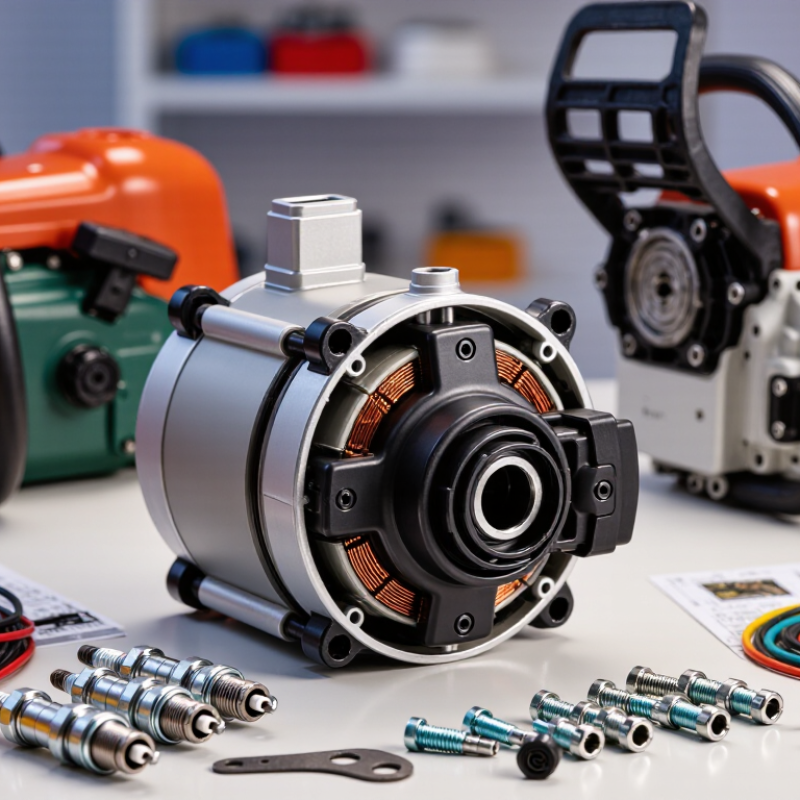
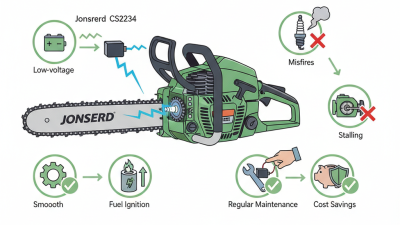
A reliable Chainsaw Ignition Coil is small, but its job is critical. It transforms low-voltage battery or magneto energy into the high-voltage spark needed at the plug. When it weakens, the saw may become difficult to start, lose power, or stop under load. The problem can look like a bad spark plug, damaged wiring, or incorrect fuel. That confusion makes careful selection essential.

Industry evidence supports taking this component seriously. The U.S. Consumer Product Safety Commission has reported tens of thousands of chainsaw-related injuries in some annual injury estimates, often involving demanding cutting conditions and equipment misuse. Safety guidance from OSHA also emphasizes manufacturer instructions, inspection, and properly maintained equipment. Meanwhile, market analyses from Grand View Research and Fortune Business Insights describe steady global demand for chainsaws across forestry, landscaping, and residential maintenance. These reports do not isolate ignition coils, but they show why replacement-part quality matters across a large working population.

A practical choice begins with the exact engine model, ignition system, mounting pattern, and connector design. Check the service manual before trusting an online listing. Compare resistance specifications, air-gap requirements, insulation quality, and included hardware. A clean-looking coil can still fail when hot. That detail is easy to miss. Experienced technicians also inspect the flywheel key, stop-switch wire, plug cap, and grounding points before blaming the coil. One weakness remains in many buying guides: resistance tests alone cannot prove reliable performance under vibration and heat. This guide examines seven useful checks, while recognizing that manufacturer data should outrank guesswork.
7 Tips for Choosing a Chainsaw Ignition Coil

Identify the Correct Chainsaw Model and Ignition System

Before choosing a chainsaw ignition coil, identify the exact saw model and engine version. The model label may sit near the starter housing, handle, or crankcase. Record the model code, serial range, engine displacement, and production year. Similar-looking saws can use different mounting holes, connectors, or ignition timing. Close is not correct.

Check the ignition system before ordering any part. Most newer saws use an electronic, breakerless system with a flywheel magnet and a stop-switch circuit. Older designs may use different trigger arrangements. Remove the cover and compare the coil shape, mounting tabs, wire route, and connector. A service manual or parts diagram provides stronger evidence than an online photograph. Measure the air gap only after confirming the manufacturer’s specification.

Use a spark tester when diagnosing a weak or missing spark. Resistance readings can help, but they do not prove the coil works under operating voltage. I have seen a coil pass a meter test and fail when the engine became warm. That detail is easy to miss. Inspect the flywheel magnets, plug lead, grounding point, and stop-wire insulation. A damaged switch wire can imitate a failed coil. Recheck the model information twice. It feels repetitive, but it prevents an expensive mismatch.
Match the Coil With Voltage, Mounting, and Connector Requirements

7 Tips for Choosing a Chainsaw Ignition Coil

Match the replacement coil to the engine’s ignition voltage specification, not its advertised spark output. A higher number is not automatically better. Check the service data for primary resistance, secondary resistance, and the required flywheel air gap. These figures determine whether the coil works with the existing magneto and trigger system. IEC 62841-4-1:2017 establishes safety requirements for chainsaws, reinforcing the need for correct insulation, clearance, and secure installation.

Mounting details matter more than many buyers expect. Compare hole spacing, bracket shape, coil height, and clearance from the flywheel. Even a small mismatch can cause contact, weak spark, or heat damage.

Connector requirements are equally important. Match terminal count, wire position, locking shape, and grounding method. Never force a connector into place.

CPSC Chain Saw Safety data reports more than 36,000 emergency-department-treated chainsaw injuries each year, so unreliable ignition should not be treated as a minor inconvenience. A multimeter helps, but resistance readings alone cannot confirm complete compatibility. That shortcut fails sometimes. Inspect the wiring, flywheel magnets, and kill-switch circuit before ordering. Photograph the original connector and measure the mounting points. It takes minutes, and it prevents an expensive wrong fit.

Check Spark Timing, Air Gap, and Engine Compatibility

7 Tips for Choosing a Chainsaw Ignition Coil

Check Spark Timing, Air Gap, and Engine Compatibility

Start with the spark. A replacement coil must match the engine’s ignition layout, not merely its cylinder size. Check the flywheel magnet position, trigger system, mounting holes, plug-wire terminal, and ground connection. Two engines with similar displacement may use different timing signals. The U.S. Environmental Protection Agency’s small spark-ignition engine rules separate equipment by engine family and emissions configuration. That distinction matters when selecting electrical parts.

Spark timing deserves careful attention. A coil installed slightly out of position can create a weak spark or poor starting. Inspect the service manual for the specified timing method. Some systems use fixed flywheel timing, while others depend on electronic triggering. Do not guess. A timing light may help, but only when the manufacturer permits that test. I have seen technicians blame the coil when a loose flywheel key caused the real fault.

Measure the air gap with a nonmagnetic feeler gauge. Many small engines use roughly 0.25 to 0.35 millimeters, but this range is not universal. Follow the engine specification. Too much clearance weakens magnetic transfer; too little can cause contact after vibration. Measure it twice. Also test resistance only as a screening step, because a meter cannot reveal every intermittent failure. The CPSC’s NEISS injury estimates often exceed 30,000 chainsaw-related emergency visits annually, reinforcing the need for reliable starting and stopping systems. ISO 11681-1 safety requirements support careful maintenance, but they do not make an incompatible coil safe.

Compare Coil Quality, Durability, and Manufacturer Specifications

Choosing a chainsaw ignition coil requires more than matching its shape. Compare coil quality, durability, and manufacturer specifications before checking the price. A reliable coil usually has clean windings, firm insulation, and secure connector joints. Inspect the casing for cracks, uneven molding, or loose terminals. Small defects can cause intermittent starting.

Check the specified resistance range with a quality multimeter. Compare primary and secondary readings with the service data, not with a random online value. Also verify mounting-hole spacing, connector type, flywheel clearance, and ignition timing. A coil may look identical yet fail because its air gap differs by a fraction of a millimeter. Follow the manufacturer’s gap specification carefully. Too much clearance can weaken the spark.

Durability depends on heat tolerance, vibration resistance, and insulation quality. Look for documented operating temperatures and tested materials, when available. Avoid products with vague specifications or missing test information. I once trusted a visually perfect replacement, but its connector loosened after repeated vibration. That experience changed my inspection routine. Appearance is not proof.

Consider the saw’s workload. Frequent cutting demands stronger thermal performance than occasional yard work. Compare warranty terms, production dates, and installation instructions from the manufacturer. A longer warranty helps, but it does not replace accurate fitment. If resistance readings seem unusual, recheck the meter and grounding before rejecting the coil. Simple errors happen. Reliable maintenance records make the final choice more defensible.

Verify Installation Support, Warranty, and Overall Value

7 Tips for Choosing a Chainsaw Ignition Coil

Verify Installation Support, Warranty, and Overall Value

A low price can hide expensive mistakes. I once treated it as proof of value. It was not.

Before buying, confirm the coil matches your saw’s model, engine version, flywheel, and connector shape. Ask whether the seller provides a wiring diagram, gap specification, and installation instructions. Clear support matters when a spark disappears after assembly. The U.S. Consumer Product Safety Commission cites more than 36,000 chainsaw-related injuries treated annually. Correct installation reduces avoidable troubleshooting and unsafe testing.

Look for a written warranty, not a vague promise. Check its length, covered failures, return shipping, labor exclusions, and proof-of-purchase rules. A longer warranty is useful only when claims receive practical support. OSHA’s Logging Operations eTool stresses training, inspection, and safe starting procedures, so technical help should cover these points. Ask how quickly support responds. Ask for replacement procedures.

Overall value includes downtime. A slightly cheaper coil may cost more after repeated returns, shipping, or lost workdays. Compare the part price with support quality and warranty coverage. Check whether the seller can provide test values, such as resistance ranges, without claiming every reading proves failure. Electrical diagnosis is imperfect. Temperature, meter accuracy, and grounding can change results. I would rather choose a documented part with responsive support than gamble on a bargain. Keep the invoice and installation photos. They can make a warranty claim much easier.

7 Tips for Choosing a Chainsaw Ignition Coil - Verify Installation Support, Warranty, and Overall Value
Tip Evaluation Dimension What to Verify Practical Evidence or Test Why It Matters Value Indicator
1 Exact model compatibility Match the chainsaw model, engine version, original ignition-module shape, mounting holes, connector, and spark-plug lead arrangement. Use the equipment identification label and compare the replacement part with the original. Do not rely only on a similar appearance. Incorrect fitment can prevent starting or cause unsafe ignition-system operation. Essential
2 Flywheel and air-gap requirements Confirm that the coil is designed to work with the flywheel magnet and that the mounting slots allow the required clearance. Follow the service instructions for air-gap adjustment. A nonmagnetic thickness gauge or the specified service tool may be required; the exact gap must come from the equipment documentation. The air gap affects magnetic induction, spark timing, and starting performance. Essential
3 Installation support Look for clear instructions covering mounting, flywheel clearance, spark-plug lead routing, and the stop-switch connection. Prefer documentation that identifies fastener locations, grounding points, connector orientation, and required tools. Support should explain how to stop the engine safely before service. Good instructions reduce installation errors and help prevent contact between the lead and moving or hot components. High
4 Electrical specification and testing Check the documented test procedure rather than assuming one resistance value applies to every coil. Inspect the spark-plug lead, terminal, insulation, and connector. Use a suitable spark tester where appropriate, and compare meter readings only with the applicable service specification. Ignition-coil resistance varies by design; a resistance test alone cannot prove that a coil is fully functional. High
5 Construction and environmental durability Assess insulation quality, molded housing condition, secure terminals, lead flexibility, and protection from heat, vibration, oil, and moisture. Reject parts with cracked housings, loose terminals, damaged insulation, bent mounting points, or poorly protected wire exits. The coil operates near engine heat and vibration, so physical integrity is important for reliable service. High
6 Warranty and return terms Confirm the stated warranty period, covered defects, exclusions, return window, proof-of-purchase requirement, and whether labor is excluded. Save the invoice, compatibility information, installation instructions, and test results. Check whether incorrect fitment or installation damage is excluded. A clear policy lowers the financial risk of a defective or incorrectly supplied part. Medium–High
7 Overall value and complete cost Compare purchase price with compatibility confidence, documentation, warranty protection, shipping, required tools, and expected service life. Use this simple comparison: total cost = part price + delivery + required tools or accessories + potential return cost. Avoid choosing solely by the lowest price. A correctly supported part can provide better value than a cheaper part that requires repeated troubleshooting or replacement. Best choice
Safety note: Disconnect the spark-plug boot before servicing the ignition system, keep the ignition switch in the stop position, and follow the chainsaw manufacturer’s service instructions. Never test for spark near fuel vapors.